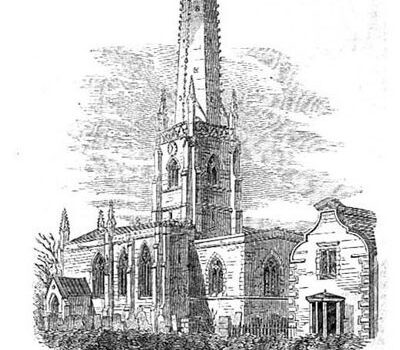
On the afternoon of 30th December 1859, large parts of England were affected by exceptional thunderstorms. Around Grantham, trees were blown down and roofs damaged. Caythorpe Church was struck by lightning twice, causing extensive damage. Around 4pm the vestry was struck. A few minutes later the whole church was hit and the top of the steeple was knocked off, falling through the roof and smashing into the nave and chancel. The rest of the tower was split apart. All the woodwork and glass was destroyed. This storm was just two months after the ‘Royal Charter’ gale hit the Irish Sea, sinking 133 ships, badly damaging another 90 and leading to 800 deaths. This led to the development of the first shipping gale warning system. The damage at Caythorpe prompted the installation of a lightning conductor at Brant Broughton church two months later. In August 1860 Newark Church was struck, prompting installation of a lightning conductor there too. In 1864 the spire of Trinity Church, Southwell was hit by lightning and seriously damaged. Sir George Hussey Packe of Caythorpe Hall organised the rebuilding at Caythorpe and employed Sir George Gilbert Scott to oversee the rebuilding and expansion of the church, which […]
Places

Holy Cross House was between High Street and Old Lincoln Road in Caythorpe, with the back of the house opposite South Parade and the Spar shop. It was approached by a drive along at what is now Holy Cross Gardens. It was believed to have been built in the early 17th century, with a parapet and extra windows added later. Lt Col Edmund Royds and his wife Rachel (daughter of Col Fane of Fulbeck Hall) lived at Holy Cross from 1900 to 1920 after having had a larger Queen Anne style wing added to the building. In 1944 the 1st Airborne Signals Regiment was based in and around Caythorpe prior to the attack on Arnhem and used Holy Cross House as their Headquarters. After the war, Holy Cross was bought by John William Oxby, a district councillor. In 1949 he sold one of the outhouses to the village for £2,000 to use a war memorial hall (now village hall). Oxby seems to have rented the house out, until his death in 1959. In March 1961 the property was sold off (see newspaper extract). And around 1963 construction of the Holy Cross housing estate began in the grounds and the house […]